guides
How to Cold Smoke Cheese at Home
Cold smoke cheese at home with just a pellet tube or maze. Covers wood selection, temperature control, timing, and the rest period explained.
 Cole Whitaker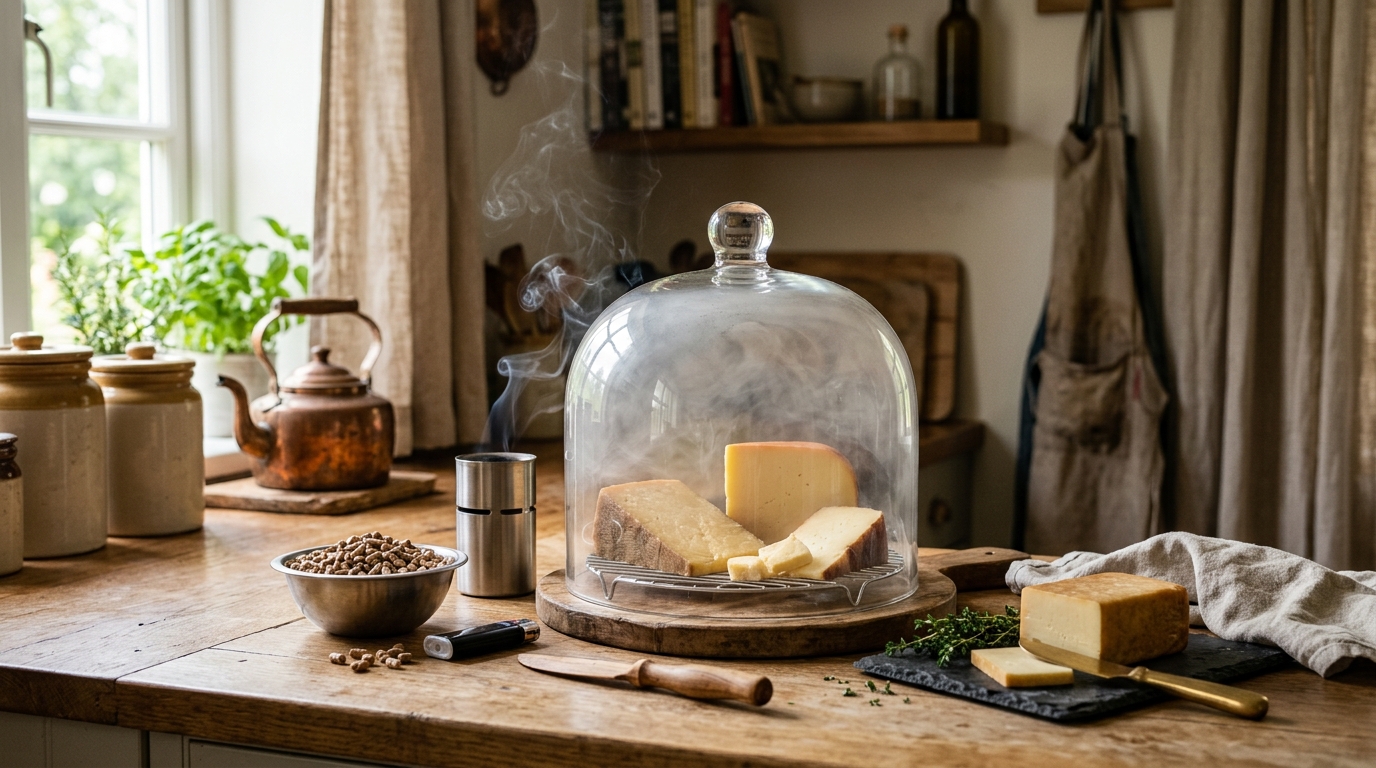
Cold smoke cheese by placing a lit pellet tube or smoke maze inside a closed grill or smoker with no active heat source, positioning your cheese on the grates, and running it at 65–90°F for 2 to 4 hours. Refrigerate unwrapped on a wire rack for 2 to 4 weeks before eating — the rest period is what transforms the raw smoke into balanced, complex flavor.
How cold smoking is different from hot smoking
Hot smoking cooks and smokes food simultaneously at temperatures from 180°F to 275°F or above. Cold smoking applies smoke at temperatures low enough that no cooking occurs — the food is flavored without being heated through. For cheese, that means staying under 90°F (ideally below 80°F) so the fat does not begin to render and the texture stays intact.
A wheel of cheddar placed on a hot smoker at 250°F would turn into a puddle of oily liquid within 20 minutes. The same cheddar in a closed grill with only a pellet tube burning — no gas or charcoal heat active — picks up hours of smoke flavor while remaining perfectly solid.
Cold smoking does not preserve food in any meaningful sense for safety purposes. The smoke is purely for flavor. The cheese you start with was already fully cured and safe to eat; you are only adding a smoke character to the surface and, with rest, allowing that character to migrate inward.
Equipment you need to cold smoke cheese
Cold smoking cheese requires almost no specialized gear. The core requirement is a way to generate smoke without generating significant heat.
A pellet tube or smoke maze is the most accessible option. A stainless steel pellet tube (6-inch or 12-inch, with 12-inch models burning for roughly 4 hours on a full load) sits on the grill grate, is lit with a torch or lighter at one end, and smolders steadily through the pellets without combustion. A smoke maze works identically but in a flat, rectangular form that can hold more pellets and extend burn time.
12-inch pellet tube smoker: pellet tube smoker on Amazon
A-MAZE-N smoke maze: smoke maze for cold smoking on Amazon
A grill or smoker to act as the smoking chamber. Any covered grill works — kettle grill, gas grill, ceramic kamado, or dedicated offset smoker with the firebox left cold. The lid is simply the vessel that traps the smoke around the cheese. A large cardboard box with a small vent for the pellet tube works in a pinch on cold days, though it is less controllable than an actual grill.
A wire rack. Cheese needs airflow underneath it during smoking and during the rest period in the refrigerator. Set the cheese on a wire cooling rack placed on the grill grate so smoke contacts the bottom surface as well as the top and sides.
A probe thermometer or instant-read thermometer to confirm chamber temperature. Ambient temperature on a hot summer day is the biggest risk factor in cold smoking cheese — 85°F outdoor air plus a pellet tube can push the grate temperature past 100°F, which is enough to start melting softer cheeses. A clip thermometer confirmed near the cheese before and during the cook keeps you in the safe zone.
Grate-level clip thermometer for monitoring chamber temperature: grill clip thermometer probe on Amazon
Vacuum seal bags or plastic wrap and parchment. Used for the rest period only, not for smoking. After smoking, the cheese rests uncovered in the refrigerator for a day or two on the rack, then wraps tightly in parchment paper followed by plastic wrap — or seals in a vacuum bag — for the remaining 2 to 4 weeks.
When to cold smoke cheese: temperature matters most
The ambient outdoor temperature on the day you plan to smoke is the single most important factor. A pellet tube adds approximately 10–20°F to the ambient temperature inside a closed grill on a calm day. If your outdoor temperature is 85°F, the grill chamber can easily reach 100–105°F, which is too hot for cheese.
Best conditions for cold smoking cheese:
- Outdoor temperature below 65°F (ideal)
- Overcast or mild days in fall, winter, or early spring
- Early morning sessions before midday heat builds
On warm days above 75°F, there are workarounds: place a small aluminum pan of ice in the grill chamber away from the pellet tube, smoke in shorter 1-hour sessions with 30-minute rests with the lid open between sessions, or wait for cooler weather. The ice pan trick works reasonably well on spring days in the low 70s but is not reliable above 80°F outdoors.
If you see the surface of the cheese beginning to glisten or sweat beads of oil, the chamber is too hot. Remove the cheese immediately and chill it back down in the refrigerator. Once firm again, it can return to the smoker during a cooler period.
Which wood to use for cold smoking cheese
Less intensity is better with cheese, for the same reason it applies to smoked mac and cheese — dairy absorbs smoke aggressively. With a brisket, the cook takes 12 to 15 hours and the smoke integrates and mellows. Cold-smoked cheese takes only 2 to 4 hours of smoke exposure, so the wood you choose is dialed in at the beginning and cannot be corrected over time.
Apple wood is the default recommendation for almost every cheese style. The smoke is mild, slightly sweet, and pairs with the fat in any cheese without overwhelming it. If you are smoking cheese for the first time, use apple.
Cherry wood adds a subtle fruitiness and produces a light amber-gold coloration on the cheese surface. The flavor is gentle and slightly more complex than apple. Cherry works particularly well with gouda and brie.
Maple wood is the mildest option of all. The smoke is clean, lightly sweet, and nearly neutral. Excellent for fresh mozzarella or mild white cheeses where you want the faintest smoke whisper rather than a forward flavor.
Hickory is the choice for aged cheddars, sharp provolone, and bold aged goudas. The nutty, pronounced smokiness pairs with the strength of aged cheeses. Use hickory sparingly — a pellet tube filled halfway with hickory and halfway with apple gives intensity without overload.
Avoid mesquite entirely for cheese. The phenolic compounds in mesquite smoke are too aggressive for the brief cold-smoking window and produce a harsh, medicinal result that is difficult to fix even after weeks of rest.
Apple or cherry wood pellets for pellet tubes: apple cherry wood pellets for cold smoking on Amazon
How to cold smoke cheese: step-by-step
Step 1: Choose and prepare your cheese. Cut cheese into blocks no larger than 4 inches by 4 inches and about 2 inches thick. Smaller blocks allow smoke to penetrate more evenly. Remove cheese from the refrigerator and let it sit at room temperature for 30 minutes — the slight surface moisture that develops helps the cheese accept smoke. Pat the surface lightly with a paper towel if condensation pools visibly.
Step 2: Fill the pellet tube or smoke maze. Pack the pellet tube tightly with your chosen wood pellets. Loose packing causes the tube to go out mid-session. Tap the tube against a hard surface as you fill to settle the pellets and eliminate air gaps.
Step 3: Light the pellet tube and let it stabilize. Use a kitchen torch or lighter to light one end of the tube. Hold the flame against the end for 15 to 20 seconds until the pellets are glowing red, then blow the flame out. The pellets should now smolder and produce thin, clean smoke. Let the tube smolder outside the grill for 3 to 5 minutes until you confirm steady smoke production with no visible flame.
Step 4: Confirm chamber temperature before loading the cheese. Place a clip thermometer at grate level inside the closed grill with no cheese yet. After 5 minutes, read the temperature. If it reads 90°F or below, proceed. If it reads above 90°F, open a vent slot to allow some heat to escape, add a pan of ice inside the chamber, or wait for cooler conditions before proceeding.
Step 5: Load the cheese on a wire rack. Arrange cheese blocks on a wire cooling rack with at least 1 inch of space between pieces. Place the rack on the grill grate. Position the lit pellet tube on the opposite side of the grate, away from the cheese but inside the closed chamber. The goal is smoke contact without the cheese sitting directly next to the heat source from the smoldering pellets.
Step 6: Close the lid and smoke for 2 to 4 hours. The timing depends on how pronounced you want the smoke flavor:
- 2 hours: subtle smoke — nearly undetectable in most cheese applications, good for very mild cheeses and first-timers
- 3 hours: moderate smoke — a clear background smoke note, works well for cheddar, gouda, and provolone
- 4 hours: forward smoke — a distinct smoked character appropriate for aged cheddars, firm goudas, and bold pairings
Check the chamber temperature every 30 to 45 minutes, especially on warmer days. Flip the cheese blocks halfway through for even smoke exposure on both faces.
Step 7: Remove the cheese and rest it uncovered in the refrigerator overnight. Immediately after smoking, the cheese surface has a sharp, unintegrated smoke smell — almost acrid. This is normal and does not reflect what the finished product will taste like. Place the blocks on a clean wire rack over a plate, uncovered, in the refrigerator for 12 to 24 hours. This allows the freshest volatile smoke compounds to off-gas before the cheese is sealed.
Step 8: Wrap tightly and refrigerate for 2 to 4 weeks. After the overnight uncovered rest, wrap each block tightly in parchment paper and then in plastic wrap, or vacuum-seal the blocks. Refrigerate for a minimum of 2 weeks before eating. At 2 weeks, the smoke has integrated into the cheese and the flavor is balanced. At 3 to 4 weeks, the smoke is fully incorporated and the flavor is noticeably more complex. Tasting the same cheese at 2, 3, and 4 weeks is a genuinely instructive experience — the transformation is significant.
Best cheeses to cold smoke
Cheddar (sharp or extra sharp) is the most forgiving and most popular choice. The dense, firm texture holds up through smoking and the rest period without any textural changes. Sharp cheddar takes hickory or apple wood equally well and produces a result that rivals commercial smoked cheddars sold at a fraction of the price.
Gouda — especially a young or medium-aged gouda — has a semi-firm texture and a buttery, mild flavor that acts as an excellent canvas. The fat content is high enough to absorb smoke deeply, and the finished product slices cleanly. Smoked gouda is reliably one of the most crowd-pleasing results from the cold smoking process.
Gruyere takes on a nutty, complex character with apple or cherry wood smoke applied for 2 to 3 hours. The result pairs exceptionally well with charcuterie boards and fondue preparations where you want depth without sharpness.
Provolone becomes significantly more interesting with 2 to 3 hours of hickory or apple smoke. Aged provolone especially benefits from the cold smoking process — the firmness of the aged variety stands up well to longer smoke sessions.
Pepper jack is an underrated choice. The jalapeño and heat already present in the cheese layer interestingly with mild fruit wood smoke, creating a finished product with smoky heat that works well as a burger melt or quesadilla cheese.
Mozzarella is the most delicate option. Fresh mozzarella needs a very short smoke session (90 minutes maximum), maple or apple wood only, and close temperature monitoring throughout. Low-moisture mozzarella handles smoke better and rests more reliably than the fresh variety.
Common mistakes and how to avoid them
Running the chamber too hot. The most common reason cold-smoked cheese comes out greasy and melted. Monitor temperature with a clip thermometer, not the built-in dome gauge, and keep the reading at grate level below 90°F throughout the session.
Skipping the rest period. Cold-smoked cheese eaten immediately after the session tastes harsh, unpleasant, and nothing like the finished product. Two weeks minimum is not a suggestion — it is the process. The chemistry of smoke integration into fat and protein takes time.
Using too much smoke time. More is not better with cold smoking cheese. Beyond 4 hours, the additional smoke accumulation produces bitterness and a creosote character rather than adding desirable depth. Err toward less exposure on your first session.
Not sealing tightly after the overnight rest. Air exposure during the 2 to 4-week rest causes the cheese to dry and crack. Vacuum sealing is the most reliable option; tightly wrapped parchment and plastic wrap is an acceptable alternative.
FAQ
Frequently asked questions
How long does it take to cold smoke cheese?
Do you need a dedicated smoker to cold smoke cheese?
How do you know when the cheese is getting too hot?
Why does freshly cold-smoked cheese taste harsh?
Can you cold smoke cheese in summer?
How long does cold smoked cheese last in the refrigerator?
What is the best wood for cold smoking mozzarella?
Bottom line
Cold smoking cheese is one of the most rewarding low-effort projects in the backyard cooking space. The active work is minimal — fill a pellet tube, light it, put the cheese on the grill, and walk away for 2 to 4 hours. The rest period handles the rest. Apple or cherry wood, a chamber temperature below 90°F, a 2 to 4-hour smoke session, and a full 2 to 4 weeks of refrigerator rest are the four non-negotiable requirements. Get those right and the result is genuinely artisan-quality smoked cheese that compares favorably to anything sold at a specialty shop — at a fraction of the cost.
For more low-and-slow smoking projects: how to use a smoker from setup to first cook, best wood chunks for smoking any protein or vegetable, how to smoke mac and cheese on a pellet grill or offset, and offset vs pellet smoker — which setup is right for you.