guides
How to Smoke Beef Ribs: Step-by-Step Guide
Smoke perfect beef ribs low and slow. Complete guide to wood, temps, timing, and doneness for beef back ribs and plate short ribs.
 Cole Whitaker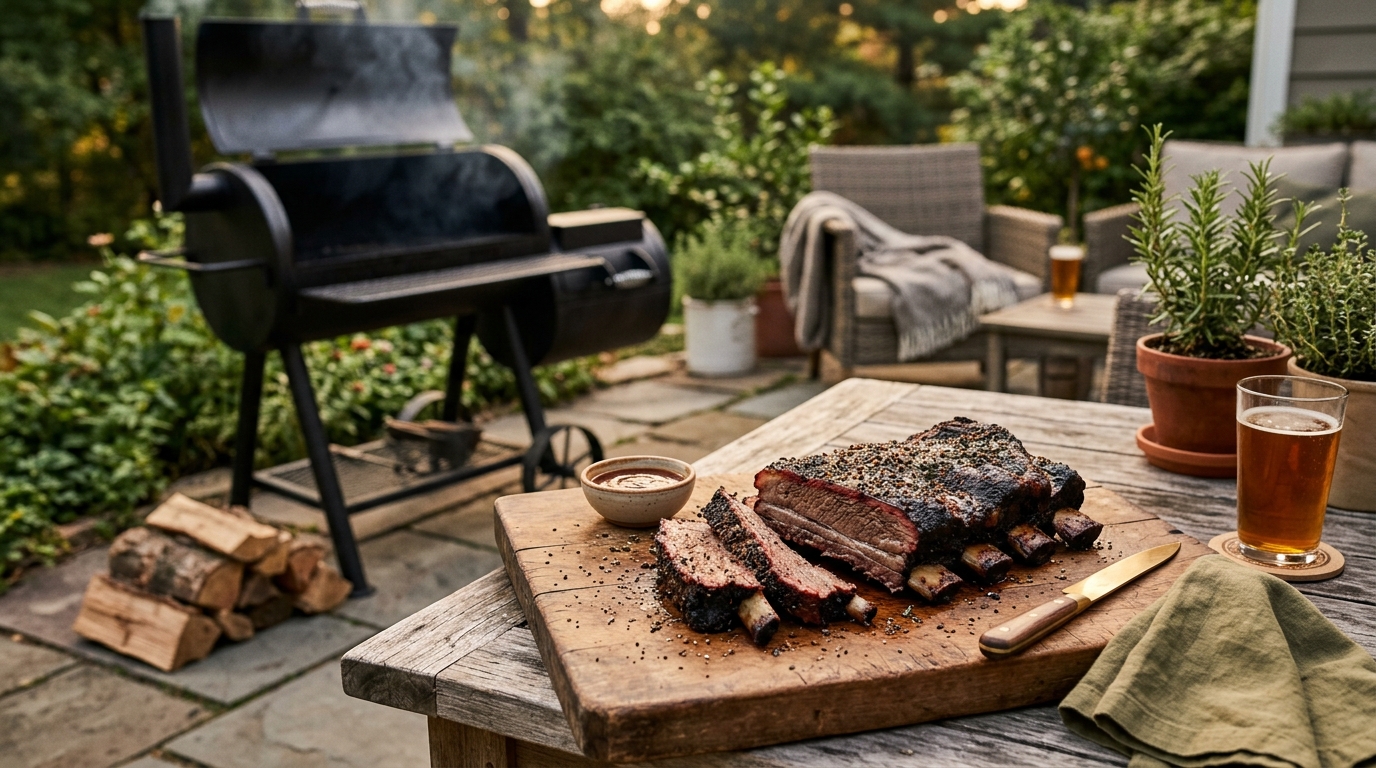
Smoke beef plate short ribs at 225°F for 8–10 hours using oak wood, a salt-and-pepper rub, and no wrap until the bark is fully set around 165°F internal. Wrap in unwaxed pink butcher paper, return to the smoker until a probe slides in with zero resistance at 203–210°F, then rest 45–60 minutes before slicing. Beef back ribs take 4–6 hours at 225°F and follow the same probe-test rule.
Beef back ribs vs. plate short ribs: which should you smoke?
The two cuts smoked most often are completely different in thickness, cook time, and yield. Knowing which one you have changes the entire plan.
| Product | Best for | Rating | Notes | |
|---|---|---|---|---|
| Beef back ribs | Shorter cooks, budget-friendly, easier to find | ★★★★☆ | Cut from the ribeye roast. Thin layer of meat sits between the bones and on top. Most meat is sold away with the roast, leaving leaner ribs. Cook time: 4–6 hours at 225°F. Better value per pound but less dramatic yield than plate short ribs. | — |
| Plate short ribs (dino ribs) | Maximum beef flavor, showstopper presentation, serious BBQ | ★★★★★ | Cut from the short plate primal. Three massive bones with 2–3 inches of heavily marbled meat on top. The Central Texas BBQ signature cut. Cook time: 8–10 hours at 225°F. High fat content renders into extraordinary flavor. Also called Jacob's ladder. | — |
| Chuck short ribs | Rich flavor, great alternative when plate ribs are unavailable | ★★★★☆ | Cut from the chuck primal. Four bones with thicker meat than back ribs but less than plate short ribs. Similar cook time to plate short ribs. A reliable alternative when plate ribs are not available at your butcher. | — |
For the most impressive smoked beef ribs, seek out beef plate short ribs from a butcher or warehouse club — Costco routinely carries them as a 3-bone slab. If plate short ribs are unavailable, beef back ribs are a good alternative with a shorter cook and easier sourcing.
Equipment you need
A reliable smoker and a good thermometer carry 90 percent of the work. A few extras make the process easier and more consistent.
Non-negotiable:
- A smoker (pellet, offset, kettle, or kamado all work)
- A leave-in thermometer with at least two probes — one at grate level to confirm ambient temp and one in the thickest section of the meat
- Unwaxed pink butcher paper for the wrap phase
- Heat-resistant gloves for handling the slab after 8-plus hours on the grate
Helpful extras:
- A spray bottle with water, beef tallow, or apple cider vinegar for occasional spritzing
- A large cutting board and sharp slicing knife for serving
- A cooler lined with old towels for resting the finished ribs
For an 8-to-10-hour smoke, a leave-in wireless thermometer is the upgrade that matters most. You can monitor both grate temp and internal meat temp without opening the smoker lid every hour and bleeding heat.
Best for Long beef rib cooks and all-day smokes
ThermoWorks Signals WiFi BBQ Thermometer
Four probes, WiFi and Bluetooth connectivity, and alarm alerts so you monitor grate temp and three meat probes simultaneously through a full 9-hour dino rib cook without hovering at the smoker.
★★★★★ 4.8 · 1,840 reviews
Check current price on Amazon→Step 1: Choose your cut and trim
At the butcher or warehouse store, look for plate short ribs sold as a 3-bone slab (sometimes labeled “beef short ribs plate”). A quality slab weighs 4 to 6 pounds and has a thick fat cap on one side and a membrane on the bone side.
Trim the fat cap. Leave approximately 1/4 inch of fat on the top surface. Thin the cap down to that thickness with a sharp boning or chef’s knife — you want enough fat to baste the meat as it renders, but not so much that it blocks smoke penetration or leaves a waxy mouthfeel when eating.
Remove the membrane. Flip the slab bone-side up. A thin but tight membrane stretches across the back of the bones. Slide the tip of a butter knife under the membrane at one corner, grip it firmly with a dry paper towel — it is slippery — and peel it away in one steady pull. This membrane does not break down during cooking and remains tough even after 10 hours in the smoker.
Step 2: Apply the rub
Central Texas-style beef ribs are seasoned with only two ingredients: kosher salt and coarse cracked black pepper in equal parts by volume. This is not a shortcut — it is a deliberate choice. The Dalmatian rub allows the beef flavor and smoke to dominate without competition from additional spices.
Apply the rub generously on all surfaces: top, bottom, sides, and between the bones where accessible. Press it in firmly rather than rubbing it, which would smear it off. Let the seasoned slab sit uncovered at room temperature for 30 to 45 minutes while your smoker climbs to 225°F.
For a beef rib rub with a little more depth: beef brisket and rib dry rub on Amazon
Step 3: Set up the smoker and run the smoke phase
Preheat your smoker to 225°F and let it stabilize before the ribs go on. Consistent ambient temperature is the single most important variable in a long cook — chasing temperature swings for 9 hours is exhausting and produces uneven results.
Pellet smokers: Set to 225°F and use oak or competition blend pellets. A smoke tube filled with oak or cherry pellets adds extra smoke output during the first few hours when bark formation matters most.
Offset smokers: Build a bed of lit lump charcoal and manage it with oak or hickory splits 3 to 4 inches in diameter. Add a split every 30 to 45 minutes to maintain 225°F at grate level. Aim for thin blue smoke rather than thick white billowing smoke — white smoke deposits acrid compounds on the surface.
Kettle or kamado: Bank charcoal to one side with oak chunks placed directly on top of lit coals. Place the ribs over the indirect side and dial vents to hold 225°F.
Place the ribs bone-side down on the grate over indirect heat. Insert the leave-in probe into the thickest section of meat, avoiding contact with bone. Start the cook and leave the smoker closed for the first 2 hours. Opening the lid repeatedly during this phase bleeds heat and smoke and interrupts bark development.
After 2 hours, spritz lightly if the surface appears to be drying out aggressively. A light spritz of water or beef tallow every 45 to 60 minutes keeps the exterior from hardening before the bark is properly developed.
For oak wood chunks: oak wood chunks for smoking beef on Amazon
Step 4: Manage the stall and wrap
Around 155–170°F internal temperature, the ribs will hit the stall — a prolonged plateau where evaporative cooling from the surface exactly offsets heat gain from the smoker. The stall can last 1 to 3 hours and is not a sign of a problem. It is the connective tissue and collagen beginning to convert to gelatin.
When to wrap: Wait until the bark is fully set — it should be dark mahogany to near-black in color, firm to the touch, and no longer tacky when pressed. If the surface still feels soft or sticky, give it another 30 to 45 minutes before wrapping. Wrapping before the bark is set traps steam against the still-forming surface and produces a soft, mealy exterior.
How to wrap: Lay out a double layer of unwaxed pink butcher paper large enough to wrap the slab generously on all sides. Transfer the ribs meat-side down to the paper and roll tightly so there are no gaps or loose flaps. Return the wrapped slab to the smoker at 225°F.
Butcher paper is preferred over foil for beef short ribs because it breathes slightly, allowing some moisture to escape while retaining heat. Foil traps steam that softens the bark built during the first phase — acceptable for fall-off-the-bone pork ribs, but at odds with the firm, well-barked results most people want from beef ribs.
For unwaxed pink butcher paper: pink butcher paper roll for BBQ smoking on Amazon
Step 5: Push through to done and rest
Continue smoking wrapped at 225°F until the probe test passes. For plate short ribs, probe tenderness typically occurs at 203–210°F internal, but the number is a guideline, not the finish line. The probe must slide into the thickest section of meat with absolutely zero resistance — comparable to pressing into softened butter. Any stiffness means the collagen has not fully converted and the ribs need more time.
Beef back ribs reach probe tenderness at lower internal temperatures, typically 195–203°F, because they have less dense connective tissue to break down.
Do not skip the rest. Once probe tenderness is confirmed, remove the ribs from the smoker — still in the butcher paper wrap — and transfer them to a cooler lined with old towels. Close the lid and rest for a minimum of 45 minutes, ideally 60 to 90 minutes for plate short ribs. Resting allows the internal juices to redistribute back into the muscle fibers rather than running immediately across the cutting board when you slice.
To slice plate short ribs, cut straight down between the bones. The meat is thick enough that each bone yields an individual serving portion that looks as dramatic as it tastes.
What is the best wood for smoking beef ribs?
Beef handles more aggressive smoke than pork, and wood selection reflects that. The right wood builds the dark bark and earthy depth that defines great smoked beef ribs.
Oak (post oak) is the standard for Texas-style beef ribs and the best default choice. It burns clean, produces moderate-intensity smoke, and has a mild earthiness that complements beef without competing with it. Post oak is the classic Central Texas choice used at celebrated BBQ restaurants throughout the state.
Hickory is bolder than oak with a sharper, more pronounced smokiness. It produces a dark, intensely flavored bark. Use it in moderate amounts or blend it 50/50 with oak if you want extra depth without crossing into overpowering territory on a 9-hour cook.
Cherry adds subtle sweetness and produces a rich reddish-mahogany color on the bark. A 70/30 oak-to-cherry blend delivers flavor complexity and visual appeal at the same time.
Avoid mesquite on long beef rib cooks. Mesquite burns hot and produces aggressive smoke compounds that build into bitterness over several hours at 225°F. Reserve it for hot-and-fast cooks of 30 to 60 minutes.
How to tell when smoked beef ribs are done
Relying on internal temperature alone is not sufficient for beef short ribs. Use all three indicators together.
The probe test. The definitive check: insert a metal probe or an instant-read thermometer probe into the thickest section between the bones. It should slide in with zero resistance — the same feel as probing room-temperature butter. This is the confirmation that the collagen has fully converted to gelatin and the rib is ready to rest.
Internal temperature. For plate short ribs, probe tenderness typically coincides with 203–210°F internal. Use temperature as a guide to know you are approaching the finish, not as the final signal.
Visual cues. The bark should be very dark — nearly black in spots — firm, and dry to the touch. The meat should have pulled back slightly from the exposed bone ends. The slab should feel noticeably heavier and slightly jiggly compared to when it went on the smoker. That jiggle is rendered fat and gelatin moving freely inside the meat.
Common mistakes when smoking beef ribs
Using too much wood. Beef absorbs smoke readily. Choking the firebox with wood for 9 hours produces bitter, acrid bark. On a pellet or kettle, 2 to 3 wood chunks at the start is sufficient. On an offset, manage for thin blue smoke throughout the cook, not rolling white smoke.
Wrapping too early. Wrapping before the bark is fully set traps steam against an underdeveloped surface and produces soft, sticky exterior texture regardless of how long the cook runs. Wait until the bark is dark, firm, and no longer tacky.
Skipping the rest. Slicing into plate short ribs immediately after the smoker produces a flood of juice that runs across the cutting board and is lost forever. A 45-to-60-minute rest in a closed cooler retains those juices in the meat.
Buying individual short ribs instead of a slab. The bone-in short ribs sold at most grocery stores are smaller braising cuts — not the right thing for this cook. You want a full 3-bone plate short rib slab. Ask your butcher to cut and order one, or check Costco and warehouse stores where plate short ribs appear regularly.
Cooking at too high a temperature. Running the smoker above 275°F tightens the exterior crust before the connective tissue inside has time to break down, leaving beef that looks done but feels chewy and dense. Stay at 225–250°F for the entire cook.
FAQ
Frequently asked questions
How long does it take to smoke beef ribs?
What temperature should beef ribs be smoked at?
Do you wrap beef ribs when smoking?
What internal temperature are beef ribs done at?
What is the best wood for smoking beef ribs?
Can I smoke beef ribs on a pellet grill?
Where can I buy plate short ribs for smoking?
Bottom line
Smoked beef plate short ribs reward patience more than advanced skill. The fundamentals cover the majority of what separates a good result from a great one: source a quality 3-bone plate short rib slab, apply a salt-and-pepper rub, run the smoker steady at 225°F with oak or hickory wood, wait for the bark to fully set before wrapping in butcher paper, push past the stall to full probe tenderness at 203–210°F, and rest for at least 45 minutes before slicing. A reliable leave-in thermometer eliminates guesswork across the long cook. Beef back ribs follow the same fundamentals on a shorter timeline. Either way, the result — dark mahogany bark, deeply rendered fat, and pull-apart beef — makes the time commitment worthwhile the moment you slice through the first bone.
For related reading: how to smoke pork ribs, how to use a smoker: complete beginner guide, best smokers at every price point, or best wireless meat thermometers for BBQ.