guides
How to Grill Pork Tenderloin
Master grilling pork tenderloin to juicy perfection. Covers prep, seasoning, two-zone method, target temperatures, and common mistakes.
 Cole Whitaker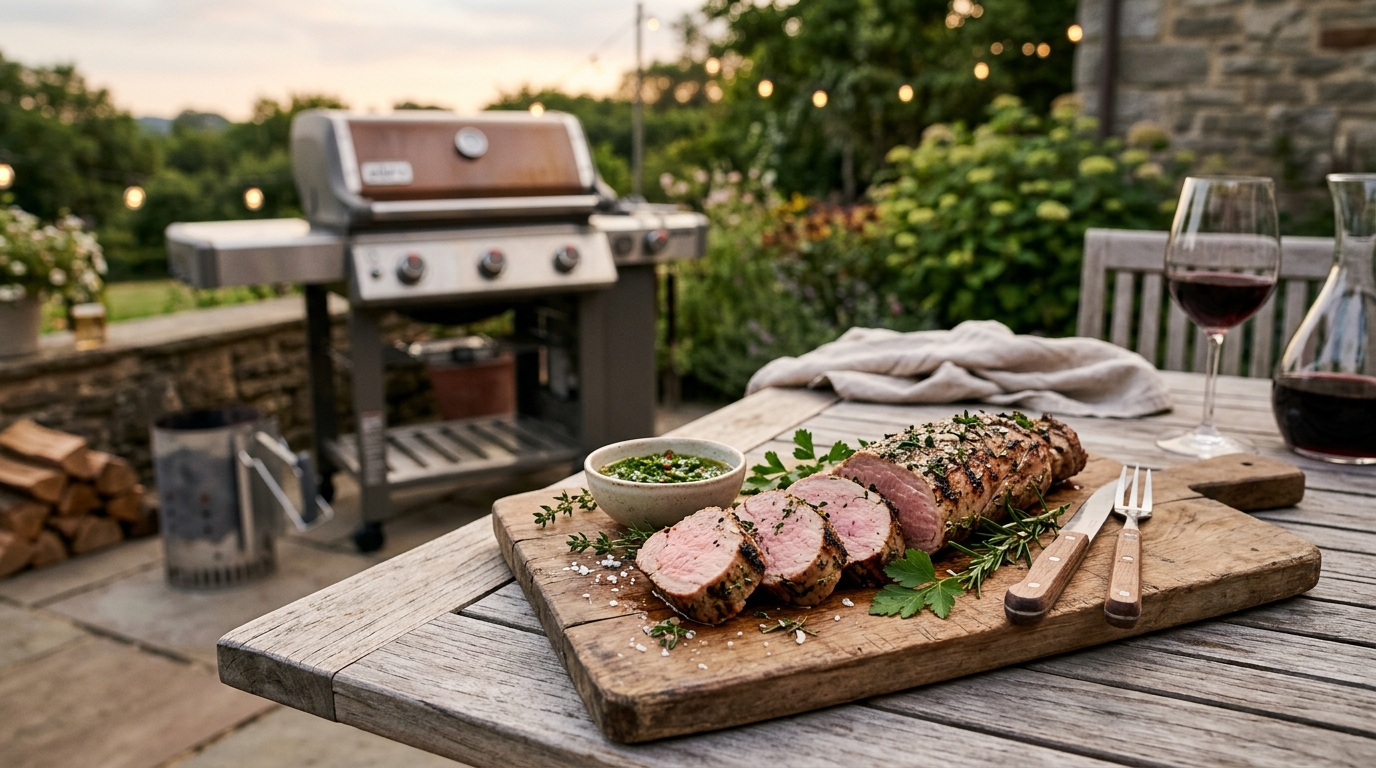
Pork tenderloin grills in 15–20 minutes using the two-zone method: sear over direct high heat for 2 minutes per side to build a crust, then finish over indirect heat until the internal temperature reads 145°F. Rest it 5 minutes before slicing — that step is what keeps the medallions juicy rather than chalky and dry.
What makes pork tenderloin different from other pork cuts?
Pork tenderloin is the long, narrow muscle that runs along the backbone of the pig. It is the leanest and most tender cut on the animal, typically weighing 1 to 1.5 pounds per loin and sold in pairs. Because it has almost no intramuscular fat or connective tissue, it cooks fast and responds well to high heat — but it also dries out rapidly if taken even a few degrees past the target temperature. A pork loin roast is a separate, larger, fattier cut that takes significantly longer to cook and should not be confused with tenderloin.
The main grilling challenge is the tapered shape: the thin end cooks faster than the thick center. Folding the thin end under the loin and securing it with a toothpick or loop of kitchen twine creates a more uniform thickness that cooks evenly from end to end.
How do you prepare pork tenderloin for the grill?
Step 1: Remove the silverskin
The silverskin is the thin, shiny white membrane on one side of the tenderloin. Unlike fat, it does not render or soften during cooking — it stays tough and papery regardless of how long it grills. Slide a sharp boning knife under the membrane at one end, angle the blade slightly upward, and use short sawing strokes to peel it away in strips. This takes 90 seconds and has a bigger impact on the final texture than any seasoning choice.
Step 2: Dry the surface
Pat the tenderloin completely dry with paper towels on all sides. Surface moisture creates steam on contact with the grill grates and delays browning. A dry surface is the foundation of a good crust whether you use a dry rub or a marinade.
Step 3: Season or marinate
Dry rub (fastest): Coat the tenderloin with a dry rub right after patting it dry. A simple formula per pound: 1 teaspoon kosher salt, 1/2 teaspoon black pepper, 1/2 teaspoon garlic powder, 1/4 teaspoon smoked paprika. Apply at least 20 minutes before grilling, or up to 4 hours ahead. For a bolder crust, add brown sugar — it caramelizes beautifully over direct heat.
Marinade (best depth of flavor): Pork tenderloin absorbs marinade quickly because of its lean surface area. A 30-to-60-minute soak is sufficient; beyond 4 hours, the acid can begin to affect the texture. A reliable base ratio: 3 parts oil to 1 part acid (apple cider vinegar or lemon juice) plus aromatics — minced garlic, soy sauce, Dijon mustard, or fresh herbs. Pat the surface dry with paper towels before grilling even after marinating, or the wet surface will hinder the sear.
Step 4: Fold the thin end
The tapered tip of a pork tenderloin is often 30–40% narrower than the thick center section. Fold the thin end under and secure it with a toothpick or wrap once with kitchen twine. This creates a more cylindrical shape and prevents the thin end from overcooking while the center is still finishing.
How to grill pork tenderloin: step-by-step
Step 1: Set up two zones and preheat to 375–400°F. For gas grills, heat all burners on high for 15 minutes, then reduce one or two burners to medium-low to create an indirect zone. For charcoal, light a full chimney of coals, let them ash over, then bank them entirely to one side. You need a hot direct zone above 400°F and a cooler indirect zone at 300–325°F side by side.
Step 2: Clean and oil the grill grates. Brush the hot grates with a wire grill brush to remove residue, then wipe them with an oil-soaked paper towel held with long tongs. Use high-smoke-point oil — canola, vegetable, or avocado oil. Avoid olive oil, which begins smoking excessively below grilling temperatures.
Step 3: Sear all four sides over direct heat. Place the tenderloin diagonally over the direct heat zone and close the lid. After 2 minutes, open and rotate the tenderloin a quarter turn. Repeat for four rotations total, covering all four sides. Total direct-heat searing time: 8 minutes. The goal is a deep golden-brown crust on all surfaces, not cooking through to the center. Leave the meat alone between rotations — moving it too early tears the crust before it has formed.
Step 4: Move to indirect heat and finish to 145°F. After searing, slide the tenderloin to the indirect zone. Close the lid and maintain the grill at 375°F by adjusting burner settings or vent positions. Check the internal temperature with an instant-read thermometer every 3–4 minutes, inserting the probe into the thickest part of the loin. Indirect cooking time is typically 5–12 minutes depending on size.
Step 5: Pull at 145°F and rest for 5 minutes. Remove the tenderloin from the grill when the thickest point reads 145°F. The internal temperature will continue to rise 3–5°F during the rest. Transfer to a cutting board, tent loosely with foil, and rest for 5 minutes before slicing. Slice on a diagonal into 1-inch medallions. Cutting immediately after removing from the grill causes the contracted muscle fibers to push their juices out onto the board rather than keeping them inside the meat.
How long does it take to grill pork tenderloin?
Total grill time is 13–20 minutes for a standard 1 to 1.5 pound tenderloin. Use the table below as a starting point and always confirm with a thermometer — ambient temperature, wind, and whether the meat was refrigerator-cold all affect actual cook time.
| Tenderloin Weight | Direct Heat (sear) | Indirect Heat (finish) | Total Time |
|---|---|---|---|
| 1 lb | 8 min (2 min x 4 sides) | 5–7 min | 13–15 min |
| 1.25 lb | 8 min | 7–10 min | 15–18 min |
| 1.5 lb | 8 min | 9–12 min | 17–20 min |
A tenderloin pulled straight from the refrigerator adds 3–4 minutes compared to one that has rested at room temperature for 20–30 minutes before grilling.
Pork tenderloin internal temperature guide
| Doneness | Pull Off At | Final Temp (after rest) | Notes |
|---|---|---|---|
| Safe and moist | 140°F | 145°F | Slightly pink center, at peak juiciness |
| Medium | 150°F | 153–155°F | Less pink, still tender |
| Overdone | 160°F+ | 163°F+ | Dry, chalky — avoid |
The USDA updated the safe internal temperature for whole cuts of pork to 145°F in 2011, replacing the previous 160°F guideline. Pork cooked to 145°F is fully safe and noticeably more moist. If you are still pulling at 160°F, you are cooking 15 degrees past the safe minimum and significantly past the flavor optimum.
What to serve with grilled pork tenderloin
Pork tenderloin is mild in flavor and pairs well with assertive sides and sauces. Grilled corn, roasted sweet potatoes, a quick pan sauce made from the resting juices, or a bright herb and apple slaw all complement the lean meat. Apply glazes — honey mustard, teriyaki, apricot preserves — during the last 3 minutes over indirect heat to let them set and caramelize without burning.
Tools worth having:
An instant-read meat thermometer is the only tool that ensures you hit 145°F without guessing. The Thermoworks Thermapen One reads in under 1 second. The ThermoPop 2 costs significantly less and performs nearly as well for home cooks.
Long-handled grill tongs with a firm grip are necessary for rotating a round tenderloin on the grates without burning your hands or losing the loin between the bars.
A leave-in probe thermometer eliminates the need to open the lid repeatedly during the indirect finish phase — it alerts you when the target temperature is reached.
Common mistakes that dry out pork tenderloin
Skipping silverskin removal. The silverskin contracts under heat and squeezes the meat underneath, creating a tough strip of papery texture on one side of every slice. Removing it takes under 2 minutes and changes the result substantially.
Cooking to 160°F. This is the single most common mistake. The 2011 USDA guideline revision dropped the safe pork temperature to 145°F. At 160°F, pork tenderloin is overcooked and noticeably dry. A slightly pink center at 145°F is correct and safe.
Not patting the surface dry. Wet surfaces — whether from a marinade or just refrigerator condensation — produce steam on contact with the hot grates. The evaporation delay means the grill must drive off that moisture before any browning can begin. Patting dry takes 30 seconds and directly improves crust formation.
Using only direct heat. High direct heat alone burns the exterior long before the center reaches 145°F on a 1-inch-plus tenderloin. The two-zone method — sear directly, then finish indirect — is the correct approach for this cut.
Skipping the rest. Cutting into the tenderloin immediately after pulling it from the grill sends the juices pouring out onto the board instead of staying in the meat. A 5-minute rest lets the muscle fibers relax and reabsorb the liquid. It is a small wait that produces a noticeably juicier result.
FAQ
Frequently asked questions
What temperature should pork tenderloin be when done?
How long does pork tenderloin take to grill?
Should you close the grill lid when cooking pork tenderloin?
Should you marinate pork tenderloin before grilling?
Is it okay if pork tenderloin is slightly pink inside?
Can you grill two pork tenderloins at the same time?
Bottom line
Pork tenderloin is one of the fastest weeknight proteins on the grill when you follow three fundamentals: remove the silverskin before cooking, use the two-zone method to sear then finish indirect, and pull at 145°F rather than the outdated 160°F guideline. A 1.25-pound tenderloin is on the table in under 20 minutes with a proper brown crust and a moist pink center. The fast-read thermometer is the only thing that makes the difference between a great result and a dry one — if you do not already own one, this is the cut that makes the case for buying it.
For related reading: how to grill a perfect steak, direct vs. indirect grilling explained, best instant-read thermometers for the grill, and how to reverse-sear a steak.